You’re probably reading this with one tab open to your calendar, another to airline fares, and a third to property listings in London or New York. The fantasy is tidy. Keep the job, change the backdrop, and answer Monday emails from a brighter, more interesting version of daily life.
That fantasy is no longer fringe. In 2025, approximately 28% of the global workforce operates fully remotely, and in the US alone 32.6 million people, or 22% of the workforce, work remotely, according to High5’s remote work statistics roundup. The appeal is obvious. You can keep career momentum while trading a familiar routine for a short season abroad.
The part people underestimate isn’t the flight. It’s the stack of decisions underneath it. Immigration status. Tax residency. Employer approval. Wi-Fi quality. Insurance exclusions. Time zones. And, often most expensive of all, where you’ll live while trying to work like a professional rather than holiday like a tourist.
A workable plan starts with one principle. Treat accommodation as infrastructure, not an afterthought. If your base is wrong, everything else gets harder. If it’s right, the legal, financial, and practical pieces become much easier to manage. If you’re weighing the mechanics of a home exchange before planning a move, it helps to understand how the process works in practice.
Table of Contents
- The Remote Work Dream Meets Reality
- Sorting Your Visas and Tax Obligations
- Creating Your Productive Workspace Abroad
- Finding Your Ideal Home Base Without the High Cost
- Managing Your Daily Life Across Borders
- Your Remote Work Abroad Action Plan
The Remote Work Dream Meets Reality
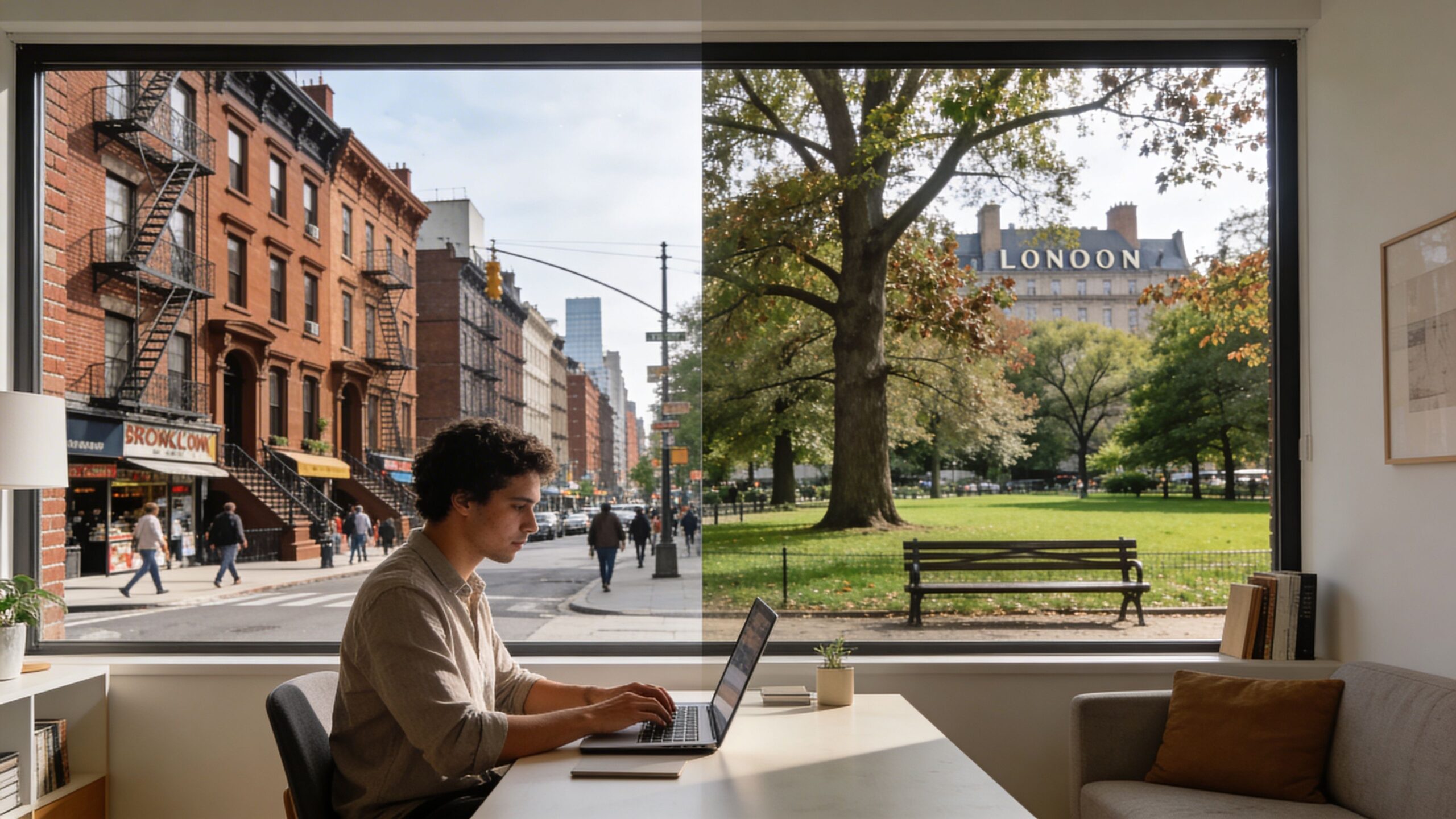
A Londoner can swap a grey commute for a few weeks in Brooklyn. A New Yorker can trade a cramped sublet search for mornings near Hampstead Heath. Working abroad doesn’t have to mean quitting a job or becoming permanently nomadic. This usually means building a temporary life that still supports ordinary working days.
What changes when work becomes portable
The biggest shift is psychological. A city stops being a weekend break and becomes a place where you need groceries, strong coffee, a reliable desk, and enough calm to get through meetings without resenting your own travel choices.
That’s why the smartest remote stays are rarely the most frantic ones. You want a base that lets you work well first, then enjoy the city around it. London and New York are ideal examples because they offer dense neighbourhood life, strong transport, and the feeling of living in a real place rather than hovering in visitor mode.
Work remotely from another country successfully, and you stop travelling through places. You start inhabiting them.
The dream is mainstream, but the logistics are personal
Remote work may be normal now, but approval to do it abroad is still highly individual. Your job might be technically remote and still not portable across borders. Your manager may be relaxed while payroll, legal, or IT is not. The move might look simple on Instagram and become complicated the moment someone asks where you’ll be paying tax or how long you’ll stay.
A more sensible approach is to break the idea into three tests:
- Legal fit: Can you enter and work in the country on the correct basis?
- Professional fit: Will your employer, clients, systems, and schedule still function smoothly?
- Lifestyle fit: Can you afford a comfortable, work-ready base without spending the whole trip as if you’re on a city break?
For some travellers, that means starting with a short transatlantic stay between London and New York before committing to a longer move elsewhere. For others, it means using a formal route such as Spain's Digital Nomad Visa when a destination offers a clearer legal path.
What works and what doesn’t
A few patterns show up again and again.
| Approach | What tends to happen |
|---|---|
| Short, well-planned stay in one city | Easier routines, better work quality, less admin fatigue |
| Constant movement between cities | Poor focus, patchy internet, too much time spent re-setting |
| Work-ready accommodation chosen early | Fewer surprise costs and smoother weekdays |
| Accommodation booked like a holiday | Nice photos, awkward desks, weak Wi-Fi, noisy calls |
The romantic version of remote life abroad is easy to sell. The sustainable version is quieter. It runs on paperwork, routines, and choosing a home base that supports the job you already have.
Sorting Your Visas and Tax Obligations
The most expensive mistake isn’t usually the airfare or the accommodation. It’s assuming that if you can enter a country, you can automatically work from there.
Tourist entry and remote work are not the same thing. Plenty of travellers blur that line. Immigration authorities, tax offices, and employers often don’t. If you want to work remotely from another country without creating trouble for yourself later, this is the part to take seriously.
Tourist permission is not work permission
Working from a laptop can feel invisible. Legally, it may not be. Some countries now offer digital nomad visas or other routes designed for remote workers, which is a sign that governments see a distinction worth regulating.
The safest first step is to ask blunt questions before booking anything:
- Does this country allow remote work on tourist status?
- If not, is there a digital nomad or equivalent visa?
- Will my employer permit me to work there at all?
- Does my industry have data, licensing, or confidentiality restrictions?
If a country offers a formal route, it’s often worth exploring. It creates a paper trail, sets clearer expectations, and gives you something better than “I thought it would be fine” if anyone asks.
Tax residency is where trips become complicated
A short stay can stay simple. A medium-length stay often doesn’t.
Many remote workers miss tax residency traps. Countries often deem you a tax resident after 183 days, but signing a lease or relocating family can also trigger residency. Digital nomad visas are rising, with over 50,000 issued globally, yet an estimated 60% of holders still face audits in their home country due to unreported foreign income, according to Oyster’s guide to working remotely from another country.
That matters because tax residency isn’t only about counting days. It can also turn on where you’ve established your life.
Practical rule: If you’re staying long enough to sign contracts, move family members, or make the place look like home on paper, assume your tax position needs professional review.
The questions worth paying a professional to answer
Tax advice isn’t exciting, but it’s cheaper than cleaning up a bad filing position. Before you commit to a stay, get clarity on these points.
-
Will this trip create tax residency where I’m going?
The day count matters, but so do local rules around accommodation, family ties, and personal presence. -
Do I still owe tax where I normally live?
In many cases, yes. That’s where double filing anxiety starts. -
Is there a treaty or other mechanism that affects the outcome?
The answer depends on the countries involved and your employment status. -
Could my employer face obligations because I’m working there?
Some companies become nervous, even if your own position seems manageable.
Keep your timeline modest at first
A practical workaround is to start with a short stay that doesn’t force major legal commitments. Don’t sign a long lease on arrival. Don’t move your whole household. Don’t make an employer confront a vague, open-ended request if what you really want is a trial period.
That approach is especially useful on the London and New York corridor, where many professionals aren’t trying to emigrate. They’re testing whether a few weeks or a month abroad can fit around an existing role.
A small checklist before you go
- Match the visa to the activity: Holiday travel and remote work may be treated differently.
- Track your days carefully: Keep your own record from the start.
- Avoid accidental anchors: Leases, family moves, and local registrations can change the analysis.
- Ask your employer early: Late disclosure makes approval less likely.
- Book professional advice before the trip, not during a tax dispute: The order matters.
The legal side doesn’t need to kill the idea. It just needs to shape it. People usually get into trouble when they treat a cross-border working arrangement like an ordinary holiday with a laptop.
Creating Your Productive Workspace Abroad
A beautiful flat is not automatically a workable office. Many remote trips falter. The listing looks polished, the area is perfect, and then you realise the “workspace” is a bar stool under a decorative shelf.
Vet the basics before you commit
Cross-border remote work often requires more kit than working from home. Research cited in a Lund University paper found that 31.6% of cross-border remote workers require extra technology compared to 17.6% of domestic remote workers, and they often pay for it themselves, which makes checking a property’s existing setup a sensible cost-saving step. The same paper is here in full if you want to look at the underlying discussion on cross-border arrangements and home-working realities: Lund University student paper on remote work across borders.
That should change how you read a listing. Don’t browse it like a traveller. Audit it like someone choosing a temporary branch office.
Look for:
- A real desk: Dining tables can work for a few days, not always for several weeks.
- A supportive chair: A stylish chair isn’t the same as one you can sit in all day.
- Strong light: Natural light helps, but glare on calls is a nuisance.
- Router position: If the Wi-Fi setup looks hidden in a hallway cupboard, ask questions.
- Noise profile: Street-facing charm can become meeting-hour chaos.
Listing photos should help, not hide
Strong photos are useful because they reveal what daily life will feel like. Wide shots of a room tell you more than cropped lifestyle images. A good property listing should show the desk area clearly, not imply one.
If you’re assessing a home exchange listing, clear imagery matters. Good hosts know that work travellers need to see the practical details, which is why solid photo guidelines for listings are more helpful than glossy styling alone.
If a host can show the desk, chair, and room layout plainly, that’s usually a better sign than a listing that keeps talking about ambience.
Ask for specifics, not reassurance
“Is the Wi-Fi good?” is too vague. Most hosts will answer yes.
Instead, ask practical questions in plain language:
- Where do you normally take video calls?
- Is there a door I can close for meetings?
- Do you use the internet for streaming and work at the same time without issues?
- Is there an external monitor, keyboard, or printer available?
- Does the building have any recurring outages or entry-system quirks?
Security matters too. If you handle client data or company systems, use your employer-approved tools, keep devices updated, and avoid treating café Wi-Fi as your primary setup. The goal isn’t glamour. It’s consistency.
A productive base abroad should feel slightly boring from a work perspective. That’s a compliment. It means it won’t keep disrupting the reason you came.
Finding Your Ideal Home Base Without the High Cost
Accommodation decides whether working abroad feels sustainable or self-punishing. In London and New York, that’s especially obvious. Both cities reward longer stays. Both can punish short-term booking habits.
Hotels solve very little for a working trip beyond housekeeping. Short-term rental platforms can work, but they often price in convenience, service layers, and guest turnover. For someone trying to work normal weeks in an expensive city, that usually means paying for a travel product when what you need is a livable home.
Why home swapping suits remote work better
Home exchange works well for remote travellers because it changes the economics and the atmosphere at the same time. You’re not booking transient space designed for short stays. You’re arranging access to a real home with a kitchen, proper storage, neighbourhood rhythms, and often a more realistic setup for daily life.
That matters on the London to New York corridor. It’s one of the easiest trips to desire and one of the fastest routes to accommodation fatigue if you rely on hotels or premium short lets. A home swap makes that corridor feel less like an indulgence and more like a manageable work arrangement.
It can also help politically with your employer. Mercer notes that about 50% of organisations prohibit cross-border remote work due to compliance fears, and that shorter, flexible test stays can be easier to frame than long leases and open-ended relocation plans, as outlined in Mercer’s article on the challenges of international remote working.
The features that matter when choosing a platform
Not all home exchange sites are equally useful for someone who needs to work full days from the property. The essentials are practical, not flashy.
Verified member profiles
You need to know who you’re dealing with. Identity checks, complete profiles, and a clear sense that listings belong to real people matter more for a working stay than they do for a weekend break. Trust reduces friction. It also makes the pre-swap conversation more candid, which is exactly when you need honest answers about Wi-Fi, neighbours, pets, bins, and building access.
Flexible swap options
Direct swaps are elegant when dates line up neatly. Real life often doesn’t. If you’re spending a month in New York while your own place in London sits empty at another time of year, a credit-based model is often more useful than trying to force a one-to-one exchange.
A system such as SwapCredits is appealing because it reflects how people travel now. You might host at one point, travel later, and not need both households to move in sync.
No hidden fees
Remote workers already carry enough variables. Flights change. insurance gets upgraded. tax advice turns out to be necessary. Accommodation should be one area where the cost structure is simple. A transparent membership model is easier to evaluate than a platform that keeps adding service or cleaning charges on top of each stay.
A real community feel
This isn’t sentimental. It’s practical. A community-led platform tends to produce better communication, more thoughtful homes, and less transactional behaviour. For families and retirees especially, that can make the difference between a pleasant temporary life and a stay that always feels provisional.
Ease of use
A clunky platform creates hesitation at exactly the wrong moment. Search filters, messaging, profile clarity, and calendar tools should help you compare like a grown-up making a medium-stakes decision. The cleaner the experience, the easier it is to assess what’s on offer at SwapSpace.
A quick comparison
| Accommodation type | Best for | Weak point for remote work abroad |
|---|---|---|
| Hotel | Very short stays | Expensive for longer periods, limited sense of home |
| Short-term rental platforms | Flexible booking | Can feel transactional and costly over time |
| Home exchange | Longer, lifestyle-led stays | Requires trust, planning, and a solid platform |
The best base abroad doesn’t feel temporary every time you make breakfast.
For solo travellers, families, and retirees, that difference is enormous. You work better when your accommodation supports ordinary life. You travel better when your budget hasn’t been gutted by nightly rates.
Managing Your Daily Life Across Borders
The glamorous problems are rarely the ones that derail a stay. It’s usually the mundane stuff. Banking that blocks a card. A mobile plan that falls apart on arrival. A team that assumes you’re available at local office hours when you’re several time zones away.
Build a boring financial setup
You want money to move in the background. That usually means using tools designed for travel and cross-border spending rather than relying on your everyday domestic bank for everything.
Wise and Revolut are common choices because they make everyday spending, transfers, and account management easier while you’re abroad. The point isn’t brand loyalty. It’s reducing friction. Keep a backup card in a separate bag, maintain access to your primary accounts, and don’t arrive with a banking setup that assumes you’ll never trigger a fraud alert.
Sort your phone before it becomes a problem
For connectivity, eSIMs are useful for speed and convenience, especially if you’re landing in London or New York and need data the moment the plane doors open. Local SIMs can be better for longer stays if you want a domestic number and simpler local billing.
If your work depends on reliable calling, don’t leave business communication to chance. A proper remote work phone system is worth considering if you need a stable professional number, call routing, or cleaner separation between personal and work lines.
For broader trip planning, neighbourhood logistics, and settling-in advice, a practical guides library helps more than generic travel inspiration. A well-curated set of local and member-focused resources, such as SwapSpace’s travel guides, can save time once the booking stage is over.
Time zones need rules, not optimism
Time-zone drift is one of the fastest ways to spoil a good arrangement. A 2022 survey noted that maintaining a regular schedule and balancing work with life in a new location is a top challenge for remote workers abroad, according to this PMC analysis of remote work patterns and risks.
That usually shows up in familiar ways. Early calls that wipe out your morning. Late calls that invade dinner. A growing sense that you’re always either slightly absent from work or slightly absent from the place you travelled to enjoy.
A few habits help:
- Set overlap hours early: Agree which windows matter most with your team.
- Protect local time: Not every call deserves your evening.
- Create an end-of-day ritual: Walk, cook, gym, or anything that marks the switch off.
- Use shared calendars carefully: Make your time zone visible so people stop guessing.
A remote stay abroad works best when your colleagues know exactly when you’re reachable and when you’re not.
Insurance belongs in the same category. Check that your cover applies to the duration of your stay and the fact that you’ll be working remotely while away. Many people assume a standard travel policy is broad enough. It often isn’t.
Your Remote Work Abroad Action Plan
A workable move isn’t built in one burst of enthusiasm. It comes together in stages. If you want to work remotely from another country without turning the process into a part-time crisis, build your timeline backwards from departure.
Six months out
Start with legality and employer fit. Check visa routes, ask whether your employer permits the destination, and get tax advice if the stay may run long or involve any formal housing commitments.
At the same time, decide what kind of stay you want. A month in New York from a London base feels different from a season in London while working US hours. Your schedule should shape the destination, not the other way round.
Three months out
Secure the home base. This is when accommodation stops being abstract and becomes operational. Confirm the property, check the workspace, ask about internet, and make sure the stay suits your actual working pattern.
If you’re applying to join a vetted home exchange community, this is also the right point to get moving with a membership process such as the SwapSpace application.
One month out
Shift into execution mode.
- Confirm documents: Passport validity, visa approvals, insurance details.
- Test your setup: Laptop, charger, headphones, adapters, VPN, backups.
- Sort money and phone access: Cards, banking apps, eSIM or local SIM plan.
- Tell the right people: Manager, clients, regular collaborators, building host.
The shape of a good remote stay is usually simple. Clear legal footing. A calm and functional home. Enough routine to work well. Enough freedom to remember why you wanted to go in the first place.
If you want a home base that makes that balance easier, SwapSpace stands out for the things that matter most in practice: verified member profiles, flexible direct and credit-based swaps, transparent pricing without hidden fees, and the sense that you’re entering a real community rather than booking another anonymous stay. For London and New York travellers in particular, that mix makes remote work abroad feel far more feasible, and far less like an expensive experiment.