
You’ve put real effort into your home, and you know it has something worth offering. Yet your listing sits quietly in a global pool of hundreds of properties, attracting little attention. The frustration is real. A poorly structured or vague listing doesn’t just miss clicks; it misses genuine travel opportunities with like-minded people around the world. This guide walks you through every step of building a home swap listing that earns trust, sparks interest, and leads to successful exchanges, from gathering your property details to communicating clearly with potential swap partners.
Table of Contents
Key Takeaways
| Point | Details |
|---|---|
| Be prepared | Gather all key property information and clarify any special requirements before listing. |
| Be honest | Write transparent, accurate descriptions and use up-to-date, authentic photos. |
| Communicate openly | Set clear expectations, reply promptly to inquiries, and discuss logistics openly. |
| Avoid common pitfalls | Double-check for missing details, confirm permissions if renting, and specify guest responsibilities. |
Gathering your property details and requirements
Once you know why an effective listing matters, the first step is to get organized. Before you type a single word into your listing form, gather everything a potential swapper would need to make an informed decision. Skipping this step leads to vague listings that generate confusion rather than bookings.
Start with the basics:
-
Property address and neighborhood name
-
Property type (apartment, house, cottage, etc.)
-
Total size in square feet or square meters
-
Maximum number of guests the space can comfortably accommodate
-
Number of bedrooms and bathrooms
-
Parking availability
-
Wi-Fi and workspace access (especially relevant for remote workers)
Next, clarify any restrictions upfront. Are pets allowed? Is smoking permitted indoors or outdoors? Is the property accessible for guests with mobility needs? These details prevent mismatched expectations before they become problems.
Also think through your special features. A rooftop terrace, a hot tub, a well-stocked kitchen, or proximity to a national park are all worth noting. These are the details that make your listing memorable rather than generic.
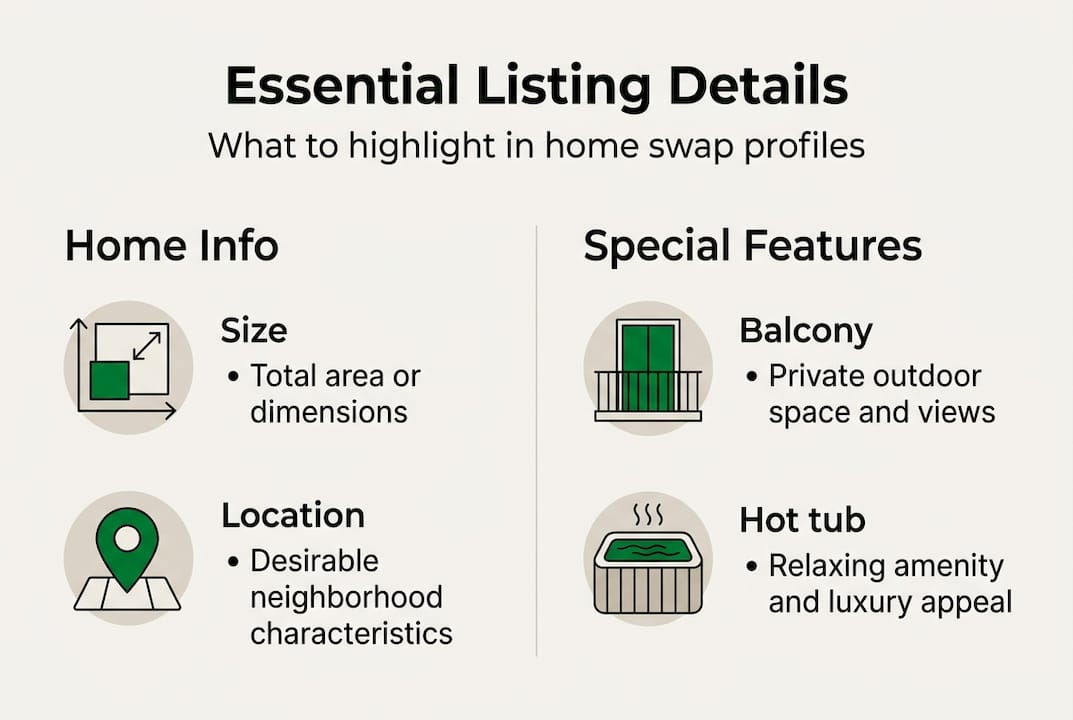
| Detail category | Examples |
|---|---|
| Basic info | Address, type, size, max guests |
| Restrictions | No pets, no smoking, accessibility notes |
| Amenities | Kitchen, laundry, Wi-Fi, parking |
| Unique features | Garden, sea view, proximity to transit |
For renters specifically, confirm sublease rules with your landlord before listing. Non-simultaneous swaps, GuestPoints systems, pet care duties, plant watering instructions, and minimum stay requirements should all be addressed in your listing from day one. Understanding how home swap works before you list will save you from surprises later.
Pro Tip: Create a simple document with all your property details before logging into any platform. This makes filling out your listing fast, consistent, and complete.
Crafting a compelling and honest description
With your details in hand, focus on how you present your home to potential swappers. The description is where your listing either comes alive or falls flat. Think of it as a warm introduction rather than a real estate brochure.
Open with what makes your home genuinely special. Is it a sun-filled apartment in a walkable city neighborhood? A quiet countryside retreat with a vegetable garden? Lead with the feeling a guest will experience, not just the square footage.
A strong description follows this structure:
-
Opening hook: One or two sentences capturing the essence of the home and its location.
-
Room breakdown: Walk through bedrooms, bathrooms, living areas, and kitchen with honest detail.
-
Amenities list: Mention practical features like washer/dryer, high-speed internet, and air conditioning.
-
Neighborhood highlights: Name nearby attractions, transit options, restaurants, or parks.
-
House rules and expectations: Be upfront about noise levels, pet and plant care duties, and any quirks.
Honesty here is not optional; it is a trust-building tool. If your apartment is above a lively bar, say so. If the shower takes two minutes to warm up, mention it. Swappers who arrive informed become happy guests. Those who feel misled leave negative feedback.
“The best listings feel like a letter from a friend who lives there, not a sales pitch from someone trying to close a deal.”
Highlight proximity to major attractions or transportation links. Swappers traveling internationally want to know how far they are from the city center, the nearest airport, or the beach. Specific distances and transit times are far more useful than vague phrases like “conveniently located.”

Pro Tip: Read your description out loud. If it sounds stiff or impersonal, rewrite it as if you were telling a friend about your home over coffee.
Taking and selecting quality photos
A strong description needs to be paired with outstanding photos. In a global home swap community, your photos are often the first thing a potential swapper notices. They decide within seconds whether to read further or scroll past.
Here are the key principles for effective listing photos:
-
Use natural light: Open curtains and blinds before shooting. Daylight makes spaces look larger and more inviting.
-
Tidy every room: Remove clutter, straighten cushions, and clear countertops. A clean space signals a well-cared-for home.
-
Capture all key rooms: Bedroom, bathroom, kitchen, living area, and any outdoor spaces.
-
Highlight standout features: A fireplace, a view, a reading nook, or a well-equipped kitchen deserve their own shot.
-
Shoot from corners: Standing in a corner and shooting diagonally across a room captures more space and depth.
| Photo style | Effect on viewer |
|---|---|
| Bright, natural light | Feels warm and welcoming |
| Wide-angle corner shot | Makes rooms appear larger |
| Detail shot (e.g., coffee station) | Builds personality and charm |
| Outdoor or neighborhood photo | Provides location context |
| Dark or cluttered photo | Reduces trust and interest |
Avoid misleading angles or heavy filters. Swappers who arrive to find a space that looks nothing like the photos feel deceived, and that damages your reputation in the community. Review the platform’s photo guidelines before uploading to ensure your images meet quality standards.
Pro Tip: Take photos on a sunny morning when light is at its best. A smartphone with a wide-angle lens setting is often enough if the space is well-lit and tidy.
Setting expectations and communicating clearly
With your listing polished, ongoing communication becomes the next crucial factor. A beautiful listing attracts interest, but clear communication is what converts that interest into a confirmed swap.
Respond to inquiries promptly. Swappers often send multiple requests at once, and a slow response can mean losing a match to someone else. Aim to reply within 24 hours, even if just to acknowledge the message and say you will follow up.
When you do respond, be transparent about:
-
House rules: Quiet hours, guest limits, smoking and pet policies.
-
Exchange logistics: Dates, duration, and whether you prefer simultaneous or non-simultaneous swaps using GuestPoints or a similar credits system.
-
Guest responsibilities: Cleaning expectations, trash disposal, and laundry instructions.
-
Practical arrangements: Key handover method, emergency contacts, and any appliances that need explanation.
“Clear communication before a swap prevents 90% of the misunderstandings that happen during one.”
Discuss contingencies early. What happens if one party needs to cancel? How will you handle overlapping travel dates? Addressing these scenarios in writing, before the swap begins, protects both parties and sets a professional tone. Review expectations for home swaps to understand what both hosts and guests typically agree on.
Always confirm arrangements in writing through the platform’s messaging system. This creates a clear record and gives both parties something to refer back to if questions arise.
Troubleshooting common mistakes and edge cases
Even the best-prepared listers encounter avoidable issues; here is how to sidestep them. Most problems in home swapping trace back to a handful of recurring mistakes that are easy to fix once you know what to look for.
Common listing mistakes:
-
Incomplete property information (missing room count, no max guest number)
-
Outdated or low-quality photos that no longer reflect the home’s condition
-
Vague or overly promotional descriptions that skip important details
-
Failure to mention restrictions like no pets or no children
-
No mention of pet and plant care duties or sublease permission for renters
Use this checklist before publishing your listing:
| Checklist item | Status |
|---|---|
| All rooms listed with accurate details | Complete / Incomplete |
| Photos updated within the last 12 months | Complete / Incomplete |
| Restrictions clearly stated | Complete / Incomplete |
| Renter permission confirmed (if applicable) | Complete / Incomplete |
| Pet, plant, and cleaning duties noted | Complete / Incomplete |
| Emergency contact included | Complete / Incomplete |
For renters, the most overlooked step is confirming sublease or short-term hosting permission with the property owner. Skipping this can lead to serious issues, including lease violations. Handle it before you list, not after.
For unusual timing needs, like a swap where one party travels first and the other follows weeks later, be explicit about how the arrangement works. Use your platform’s calendar tools and credit systems to manage these cases cleanly. Review common home swap questions for guidance on edge cases.
Pro Tip: Ask a friend or family member to read your listing as if they knew nothing about your home. Their questions will reveal exactly what you forgot to include.
Our unique approach to effective home listings
Most guides focus on checklists and photo tips, and those things matter. But the listings that consistently attract great swap partners share something harder to quantify: they feel like they were written by a real person who genuinely wants their guests to have a good time.
Over-polished listings often backfire. When every sentence sounds like marketing copy and every photo looks like a hotel shoot, potential swappers start to wonder what is being hidden. Authenticity, including the small personal touches like mentioning your favorite local bakery or the best spot to watch the sunset from your balcony, builds more trust than perfection ever could.
Responsiveness matters more than most people realize. A listing with average photos but a host who replies within an hour will outperform a stunning listing with a host who takes three days to respond. Swappers are making plans. They need to know you are engaged and reliable.
The mistake most listers make is assuming that features close deals. They don’t. Hospitality does. A warm, honest, responsive host is the feature that no amenity list can replace. Treat your listing as the beginning of a relationship, not a transaction, and the right swap partners will find you.
Take the next step with your home listing
Ready to put these best practices into action? SwapSpace makes it straightforward to build a listing that works for you, whether you are swapping a city apartment or a countryside retreat.
Join a community built on trusted home swapping and start connecting with verified members around the world. Not sure where to begin? The platform’s dedicated resources explain exactly how swapping works, from your first inquiry to key handover. You can also review the platform’s photo guidelines to make sure your listing looks its best from day one. Registration is free, and the community is ready to welcome you.
Frequently asked questions
What are the most important details to include in my home listing?
You should include property size, location, amenities, unique features, and any restrictions like pet or smoking rules. The more specific and honest your details, the more confident potential swappers will feel reaching out.
Can renters list their homes for a home swap?
Yes, renters can participate if they have proper owner permission and follow their sublease rules. Always confirm this in writing before creating your listing to avoid any lease complications.
How can I make my listing stand out to international swappers?
Highlight unique aspects of your home and neighborhood, use high-quality photos, and write a warm, authentic description. Detail bedrooms, bathrooms, and amenities clearly so international guests can picture themselves staying there.
What should I do if someone wants a non-simultaneous swap?
Communicate your preferences clearly and use systems like SwapCredits to manage timing differences. Setting calendar availability and confirming arrangements in writing keeps both parties aligned.